


2022
9 min read
Discover Me: Transforming Academic Collaboration through Innovation
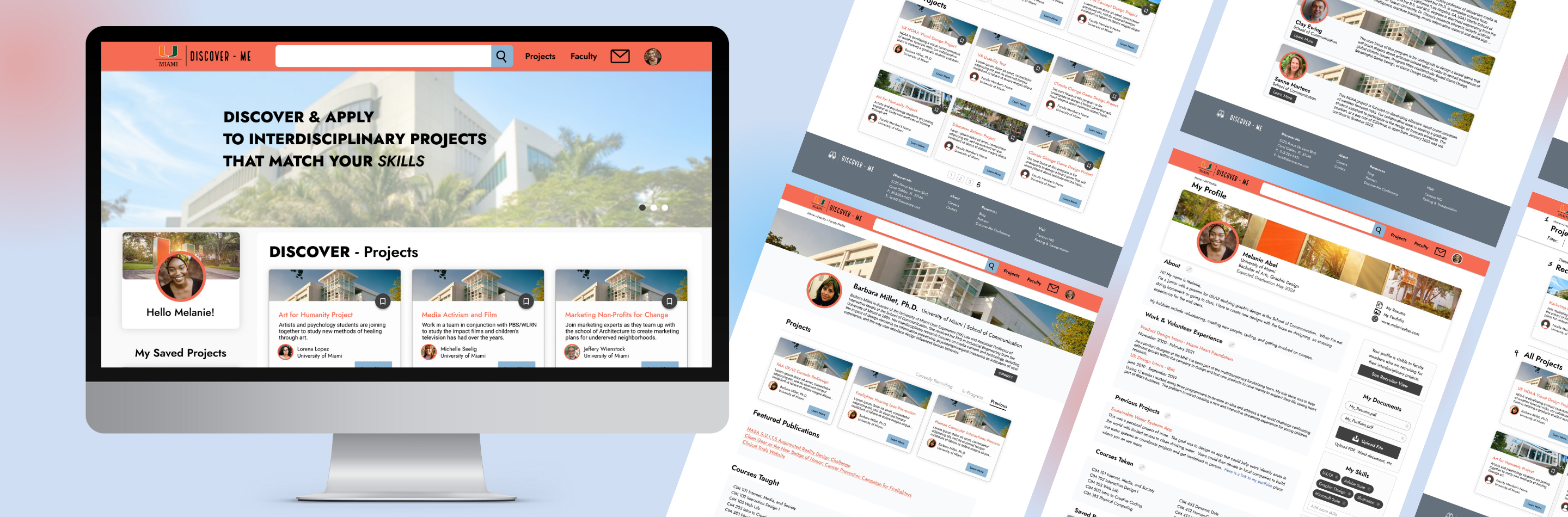
As interdisciplinary research accelerates in higher education, universities face a structural challenge. Collaboration is encouraged, but discovery and recruitment systems are fragmented. Discover-Me is a 0→1 web platform designed to streamline the pipeline from opportunity discovery → application → connection → collaboration. In higher education, interdisciplinary work is on the rise. Despite the multiple benefits to the university, faculty members, and students finding a project or the talent is difficult as barriers to entry often limit and the discoverability of new opportunities. Designed to revolutionize how students and faculty members connect and collaborate, Discover Me consolidates interdisciplinary project application information. Empowering the higher education community with a seamless platform that makes it effortless to search for peers, communicate effectively, and showcase profiles. This web application enhances an institution's productivity and innovation by making every connection count.
September - December 2022
UX Design Team of 2 | Collaborator Noel Nunez
Higher education faculty members and students
Lead Product Strategist & designer. I owned research, UX architecture, and product direction while collaborating on visual design and UI execution

The university setting offers many opportunities for students. However, the process of finding hands-on projects can be overwhelming, confusing, and limited to one’s academic college. Students from each discipline (business, fine art, medicine, etc.) are segregated from others outside of their respective fields of study and opportunities to pursue interdisciplinary work are presented with barriers of entry.
High-value opportunities remain hidden. To continue fostering new innovations, research-based universities need a solution to streamline and broaden the discovery to application to successful collaboration pipeline. With a 14-week timeline, our challenge was to define, validate, and pitch a 0→1 product that could transform how interdisciplinary recruitment works at a university.
My Role & Responsibilities
While my partner led the visual identity and UI design direction, I led the product strategy direction and UX architecture for Discover-Me. My focus was defining what we were building, why it mattered, and how it would function. A few of my direct responsibilities were:

My team utilized the design thinking approach as a framework to guide design and problem solutions. Our team began the “Empathize” stage of the process interviewing current collegiate students to better understand the landscape surrounding their professional development outside of the classroom.
Original Problem Statement: Students who want professional development opportunities through projects, don't have a way of connecting with others and working on these projects on campus.
Original how might we: HMW facilitate the process of connecting students from diverse disciplines across campus so that they might socialize, innovate and collaborate on projects to design solutions for grant problems?
As my partner and I consistently re-evaluated the problem statement we identified a strategic flaw. Students were not seeking peer-led extracurricular projects. They were seeking career-aligned, faculty-backed experiences. This insight changed the product direction as the scope expanded to include university faculty members and redefine the opportunity.
The goal was to understand the challenges and benefits associated with faculty and student work on interdisciplinary projects. Research aimed to generate insights about:
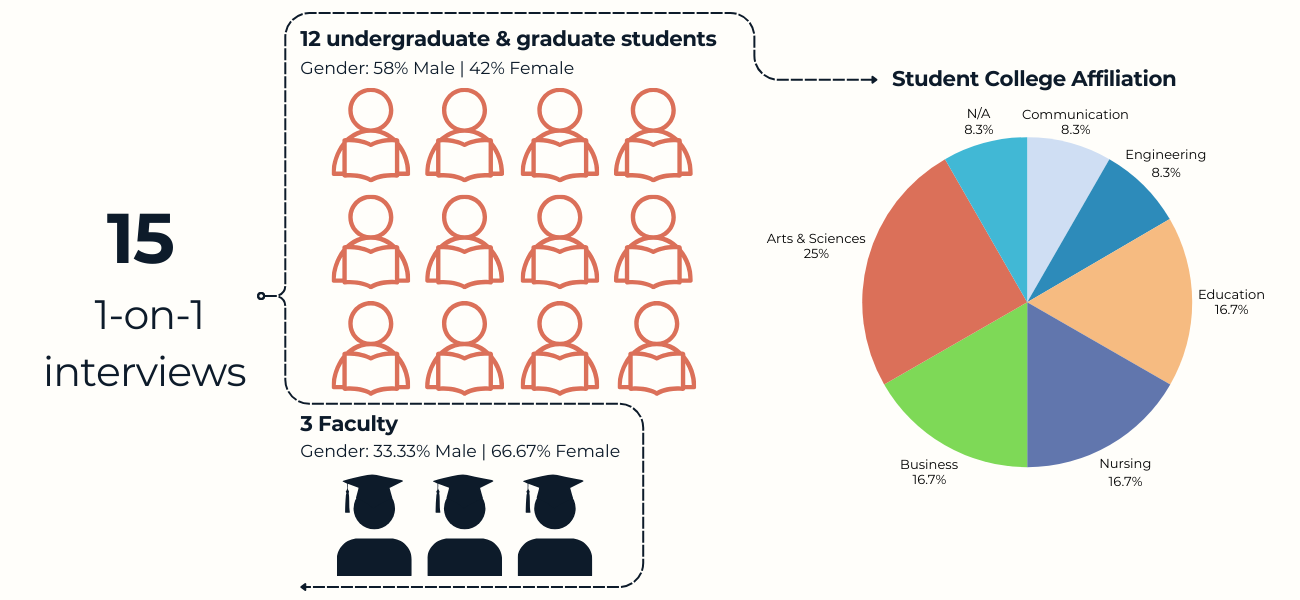
Analysis & Insights
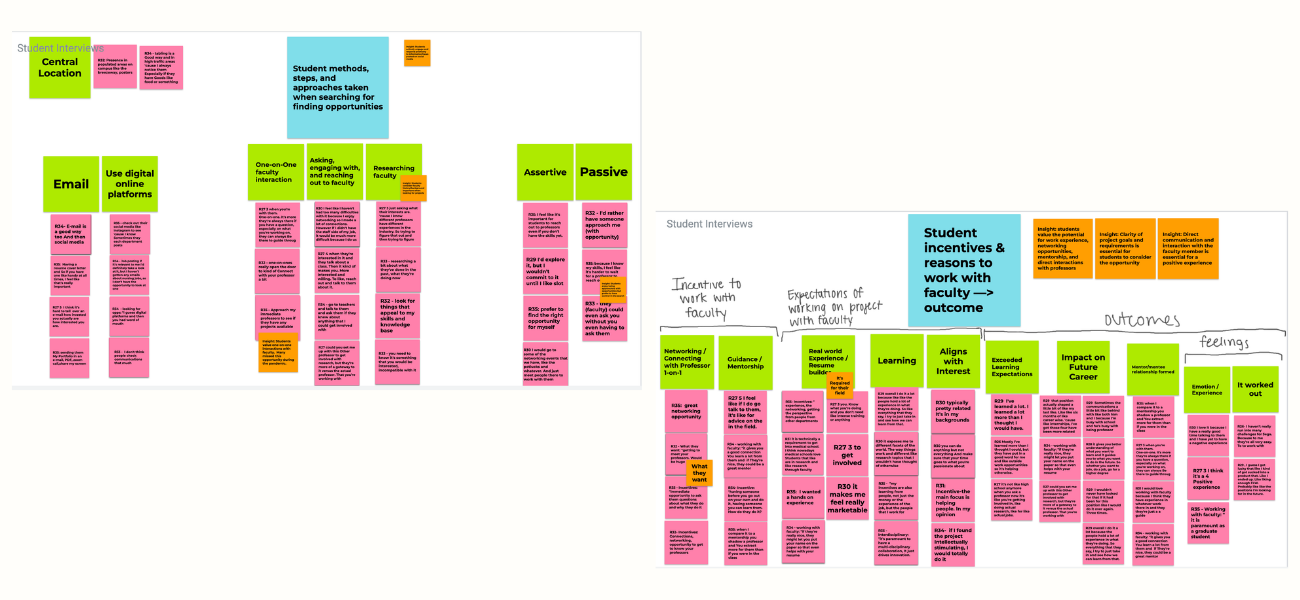
Student Insights
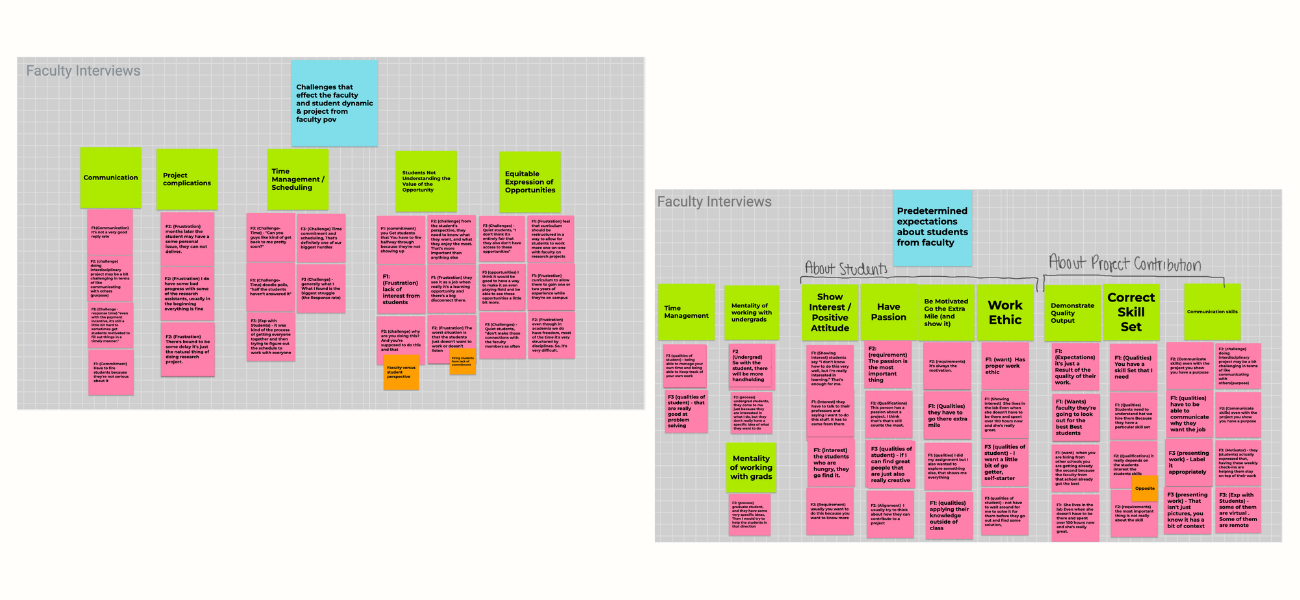
Faculty Insights
Strategic Reframe
Reviewing the insights acknowledged that students need a strong incentive to work on anything beyond regular course work. There is a clear want for leadership and direction, however students did not find enough value in working on extracurricular projects that were run by other students. Despite this, an overwhelming majority of students wanted to get valuable experience and knowledge that would help them in their careers.
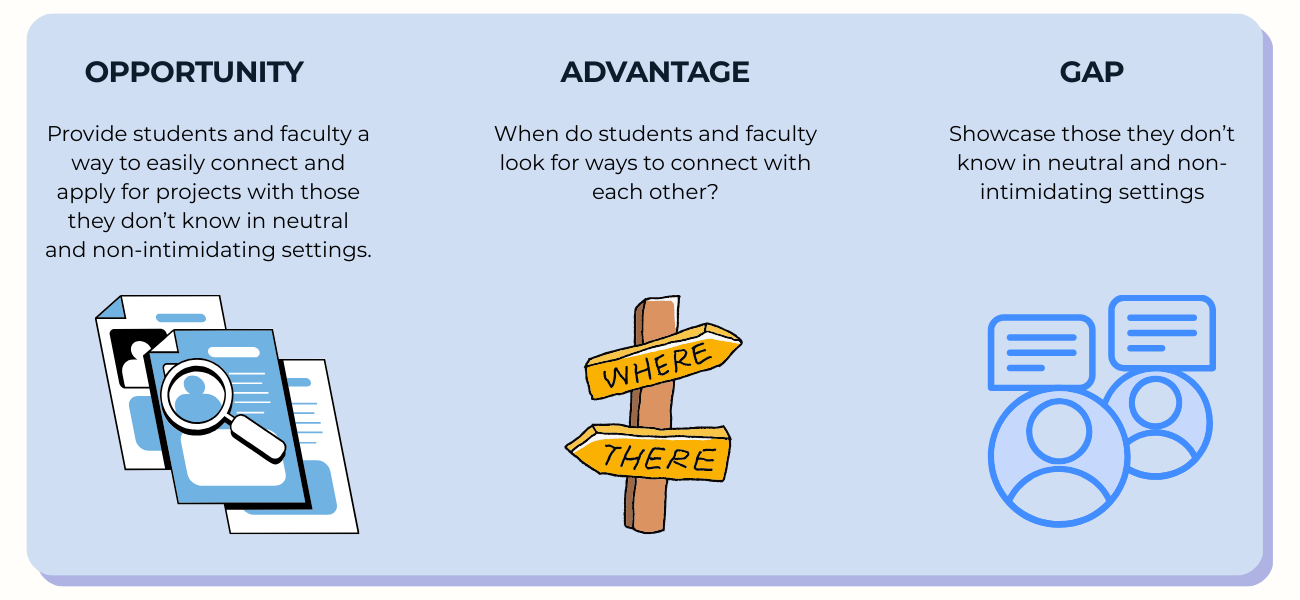
Research indicated that students had no interest or incentive to spend time working on projects that would not serve them in their education or careers. Including faculty as stakeholders in the research yielded stronger results and the real opportunity. The interdisciplinary recruitment process lacks structure, transparency, and targeted matching.
Introducing faculty and their interdisciplinary projects, addressed the following student needs:
To define a design strategy our team took the additional insights gained to reframe the problem. Research uncovered that it is a challenge for faculty members, working on interdisciplinary projects, to find and recruit students with specific skill sets that differ from the faculty members current subject area of expertise. It is also a challenge for students to discover faculty that have experiential opportunities available.
Since university interdisciplinary projects lack a defined recruitment process…
How might we facilitate the process of finding and connecting faculty members to students who have skills that differ from the faculty members’ current area of expertise so that they might contribute to interdisciplinary projects on campus?
Student Perspective: How might we facilitate the process of finding and presenting opportunities for students to work on interdisciplinary faculty projects that best match a student’s skill?
Design Strategy
Our design strategy centered on building a two-sided recruitment marketplace.
Ideate
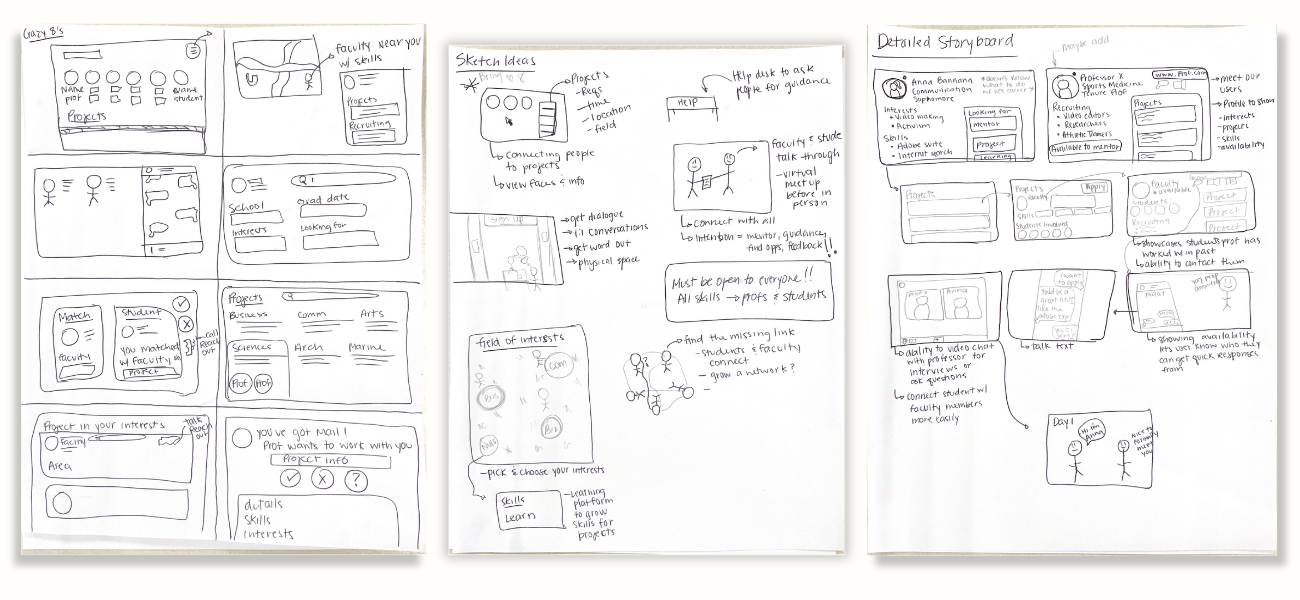
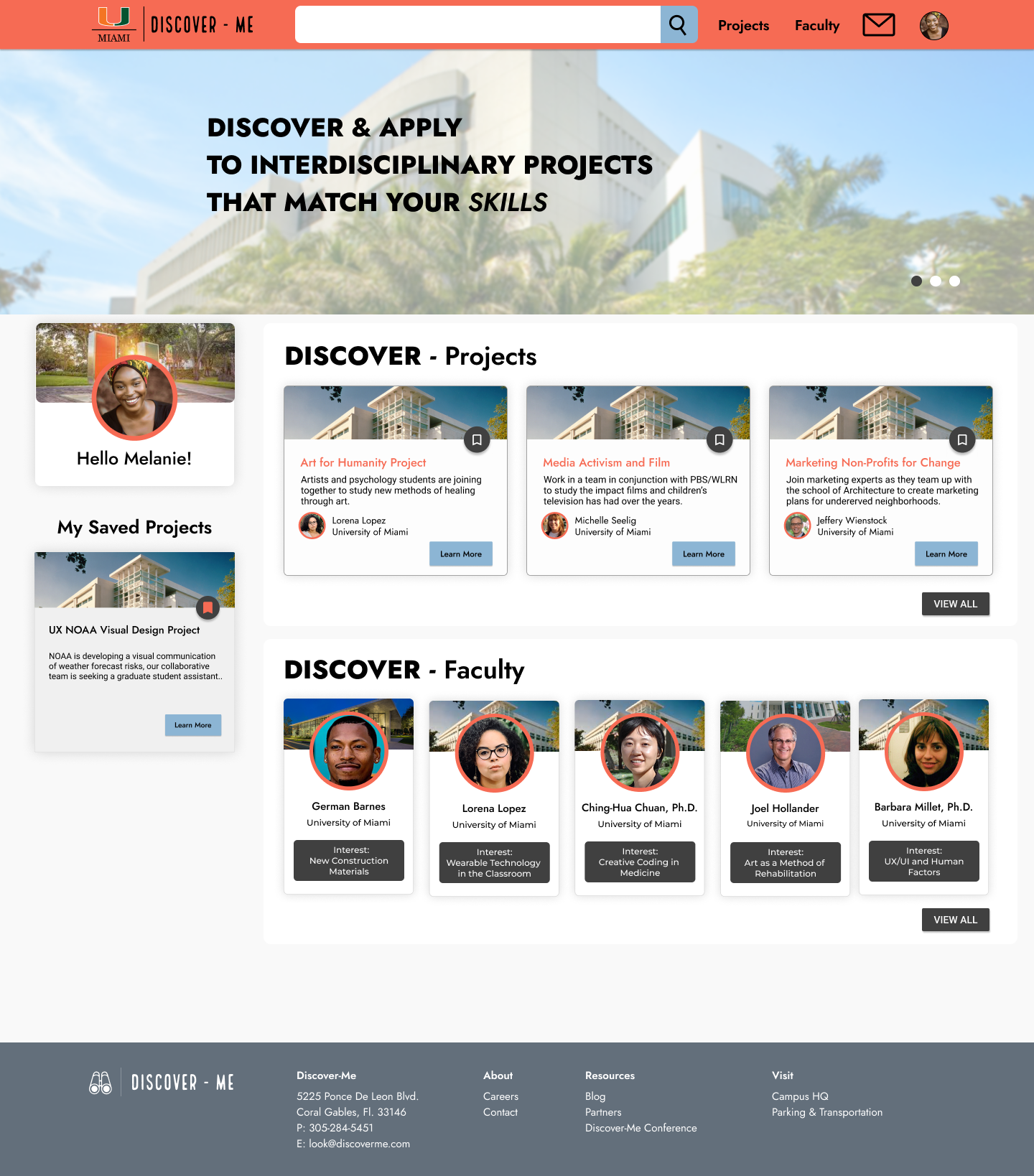
During this phase of the project, many different design solutions were proposed. Out of the many brought to the table, my partner and I decided to move forward with Discover-Me. Using profiles, students will be able to understand faculty background and connect through different communication methods. Users will also be able to search for projects.
A portal for students and faculty members to apply, connect, and communicate during an interdisciplinary project recruitment cycle. It’s not the traditional job posting site but a targeted method for connecting students and faculty. With Discover-Me university interdisciplinary project thrive, students and faculty members connect, and opportunities are showcased in a way like never before!
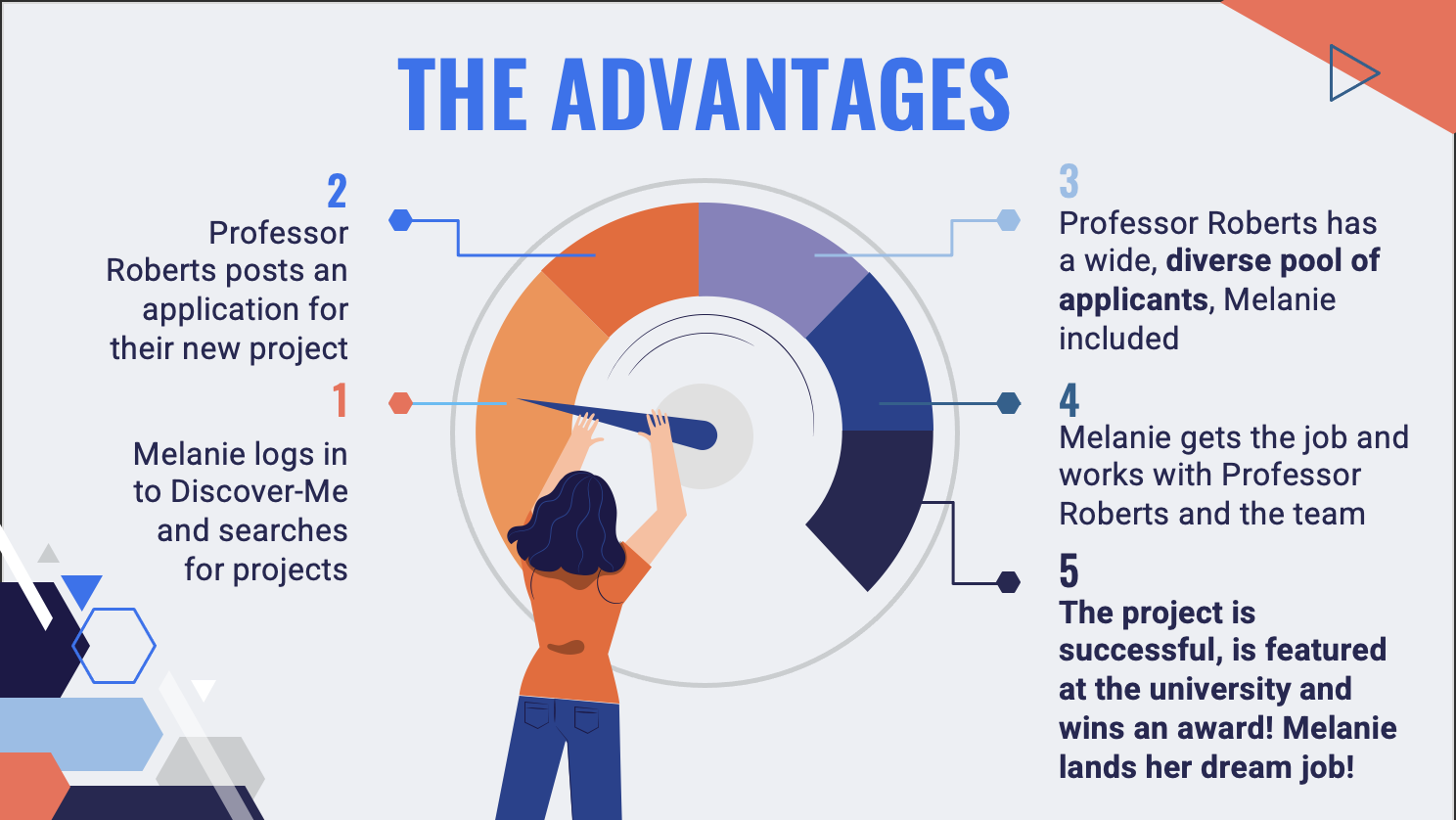
One centralized location combines the project application process with the ability to instantly connect. At the click of a button, all opportunities are presented. Go one step further, and the ability to understand a professor or a student is personified in a way unlike ever before. Users can communicate via direct message, video or email in a professional yet non-intimidating setting. Faculty members no longer need to worry about understanding who a student is, and students eliminate the intimidating circumstances around approaching a professor for the first time.
First impressions along with who’s recruiting/searching can be given with one quick glance of a user’s profile. Interests revolving around projects are housed within the search function. Connection is the main priority, but applying for projects and opportunities is possible.
Design Evolution
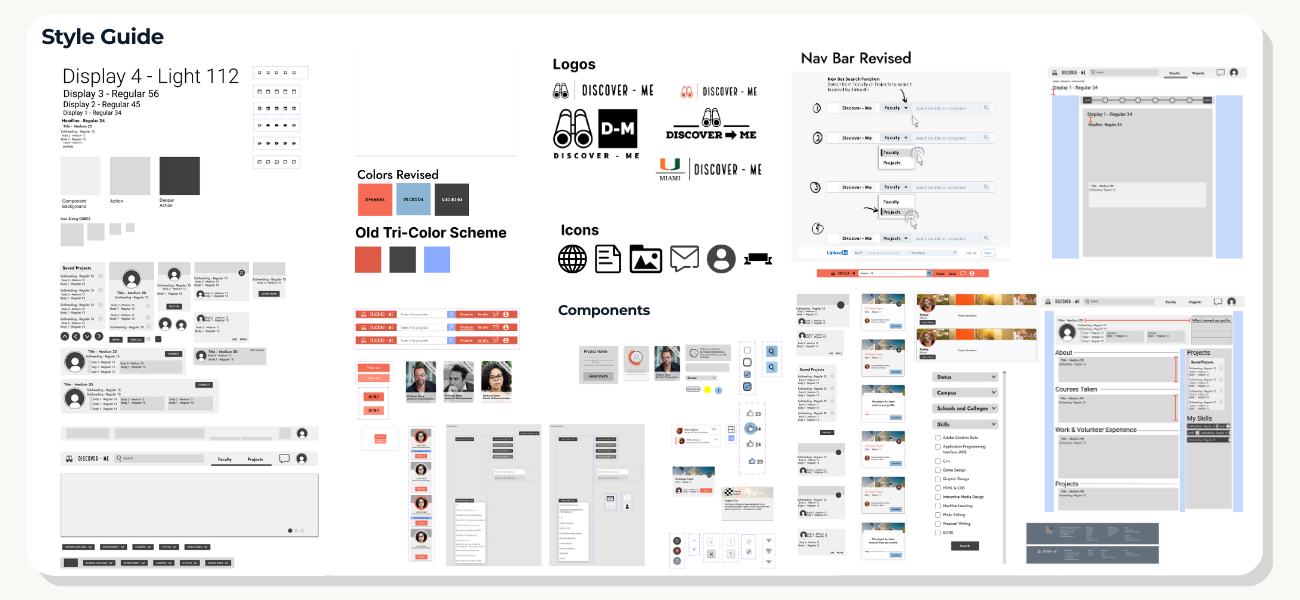
I led the architecture and interaction design across:
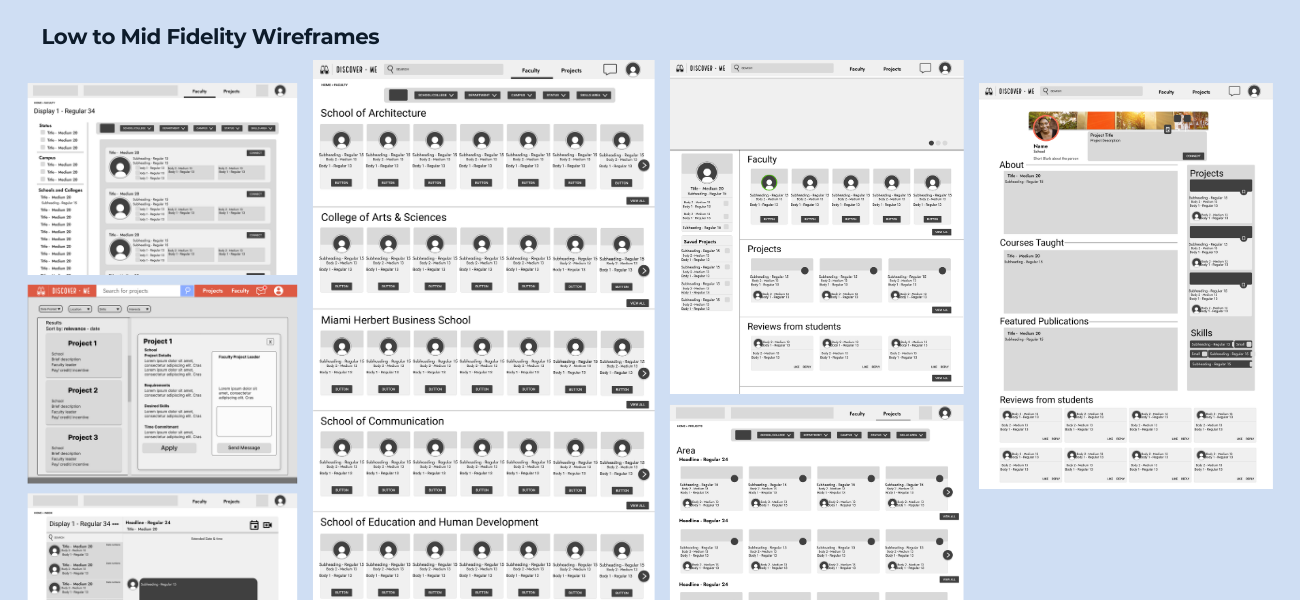
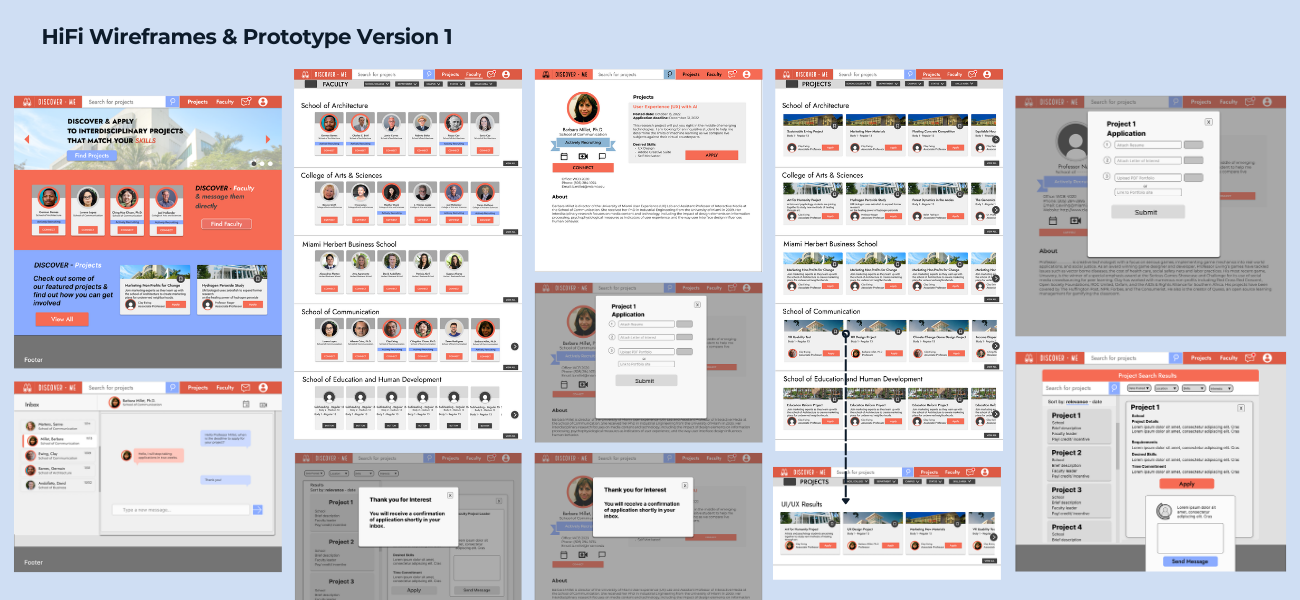
Sketches → Wireframes → Interactive Figma Prototype
We utilized a combination of paper and digital prototyping early on to establish the flow of the product.
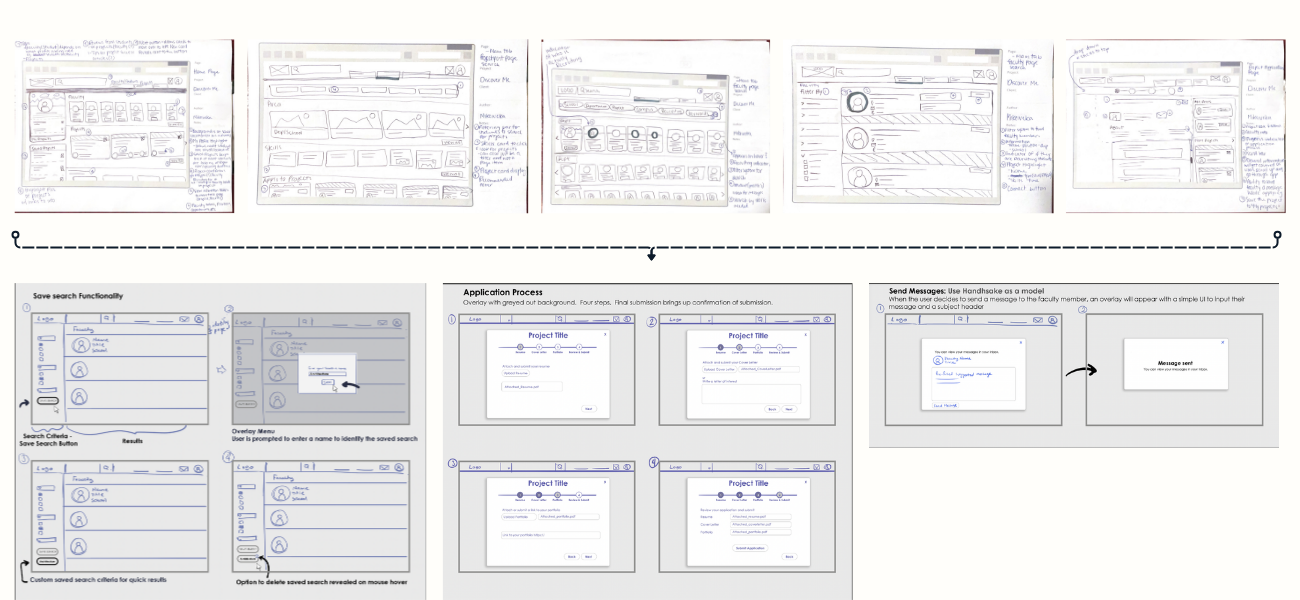
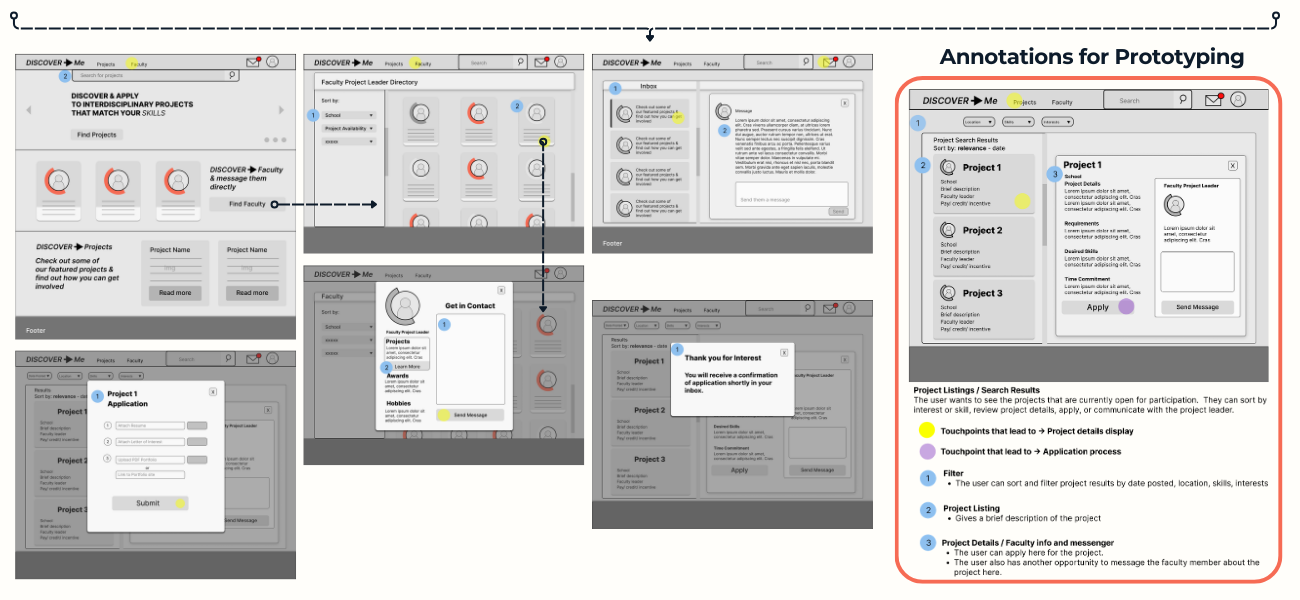
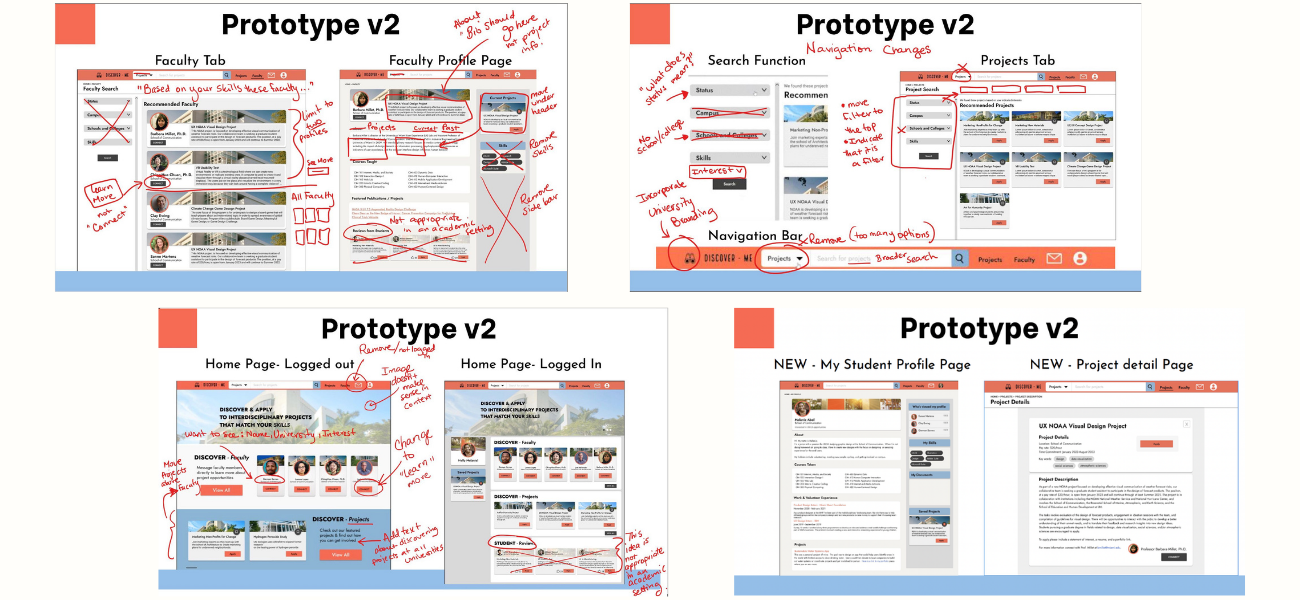
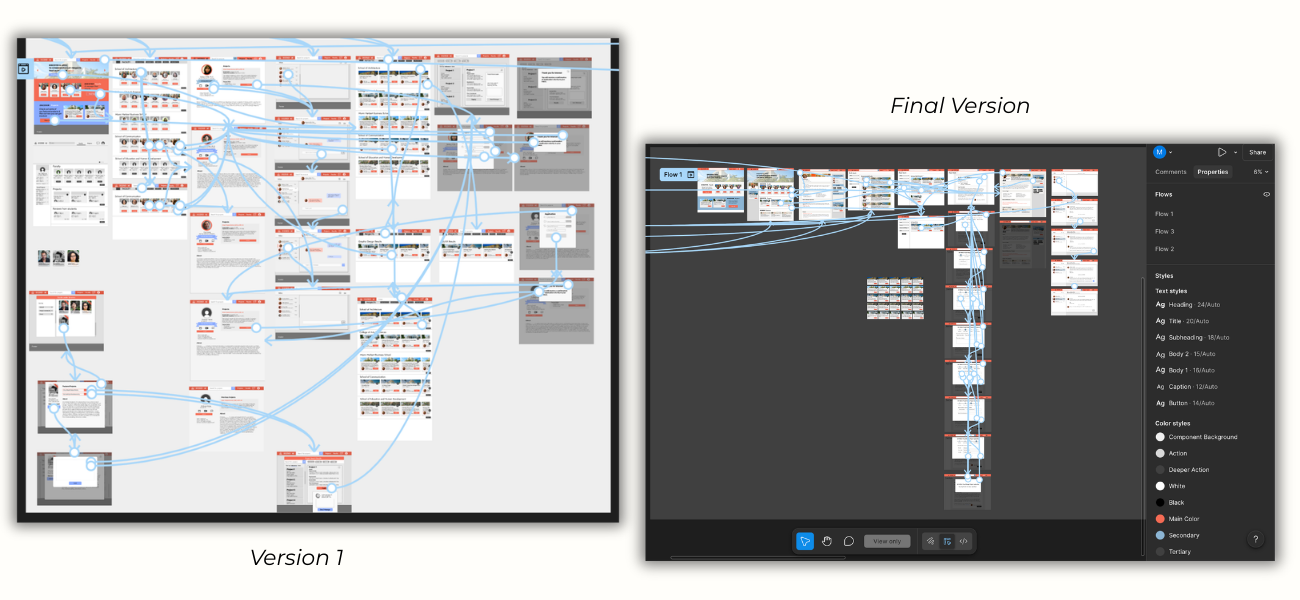
Annotating our wireframes along the way ensured that we both agreed on the outputs and product design. Annotated wireframes clarified:


Two rounds of feedback were utilized
Round 1: Task-Based Usability Testing
The total sample size contained 3 participants. Test sessions were recorded via zoom (cameras off, microphone on, screen shared). Tasks included navigating four main pages
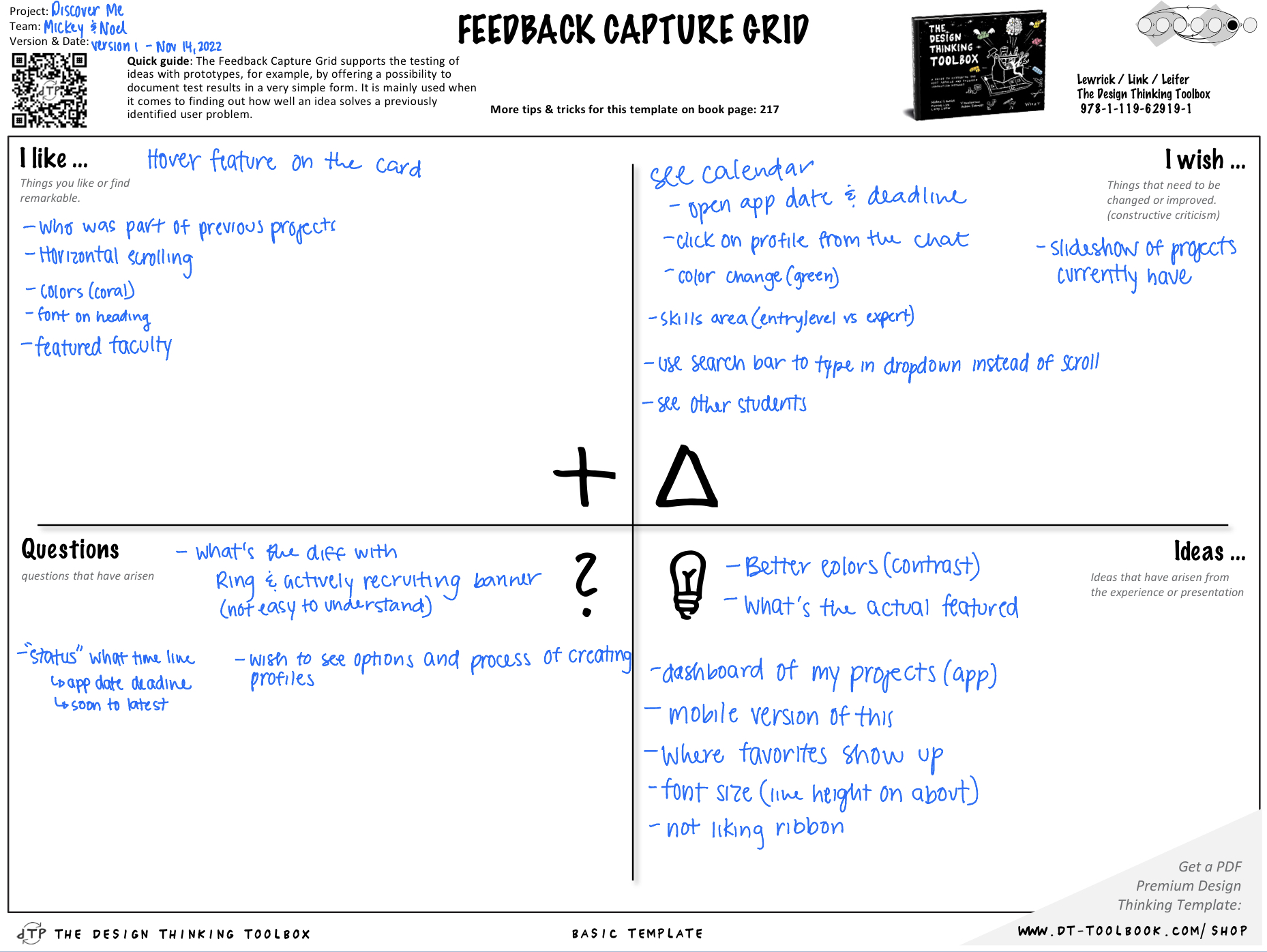
Round 1 Major takeaway
Users of the site are intentionally looking for current projects that fit their skills and interests, and they do not want to “waste time” sorting through unnecessary information.
Round 2: Concept Validation & Refinement
Moderators walked through the prototype and allowed participants to provide feedback in the end.
Round 2 Major takeaway
Users like the personalized listing of recommended faculty and projects based on the user’s inputs. The information needs to be presented more intuitively and the search feature needs adjustments in order to reflect broader search terms.
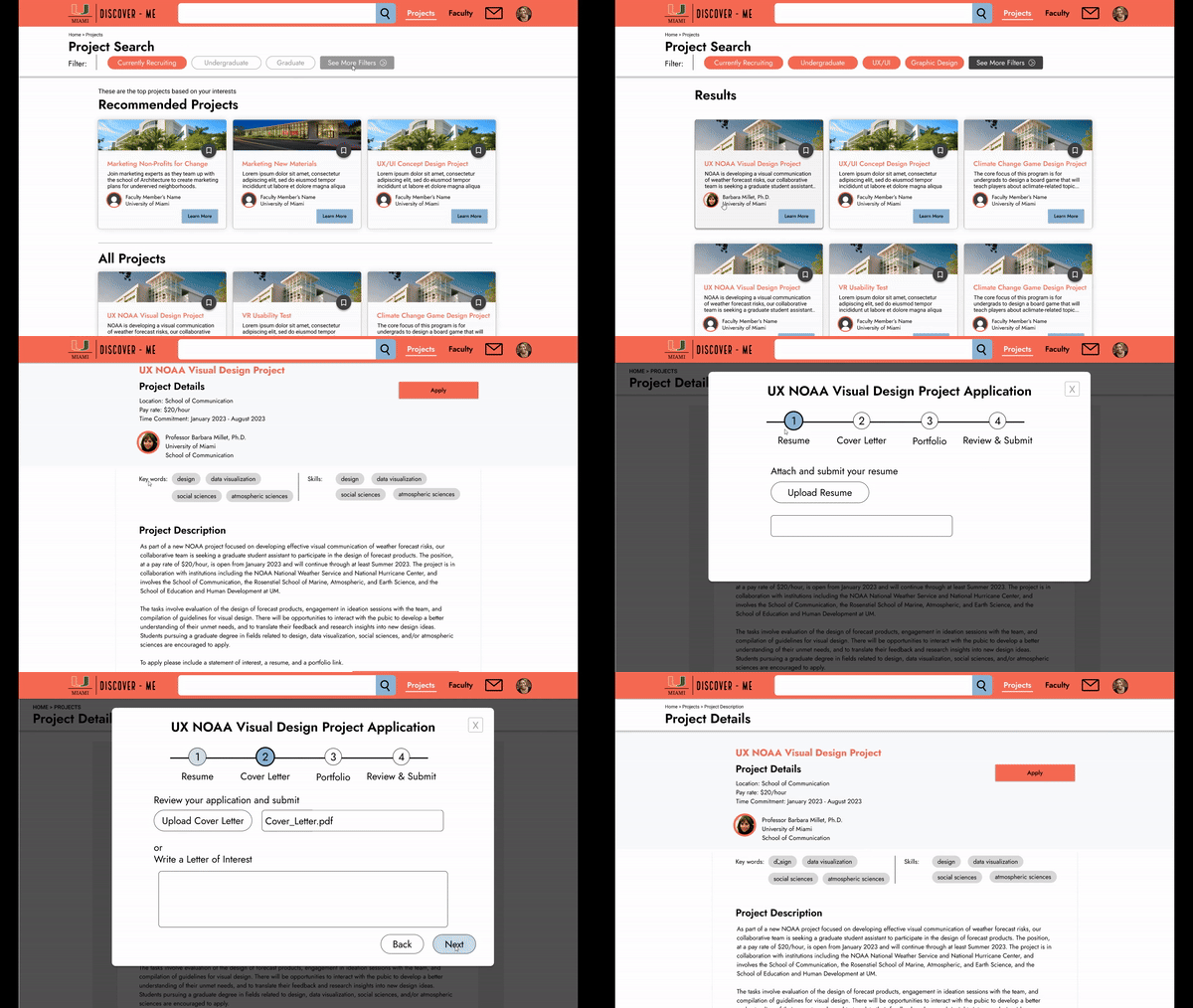
Discover-Me helps universities achieve their mission of solving the world's most challenging problems by making the process of collaborating on interdisciplinary projects intuitive, inviting, and equitable. The once fragmented recruiting process of word-of-mouth promotion is streamlined. Faculty gain a dedicated home for their project search (opportunities, criteria, skills, etc.). It’s easy to find talented students across the entire university, opening the gates to any student with a passion for the subject. Students gain valuable real-world experience. It’s easier than ever to discover, apply, and connect with faculty on projects that align with their skills and passions.
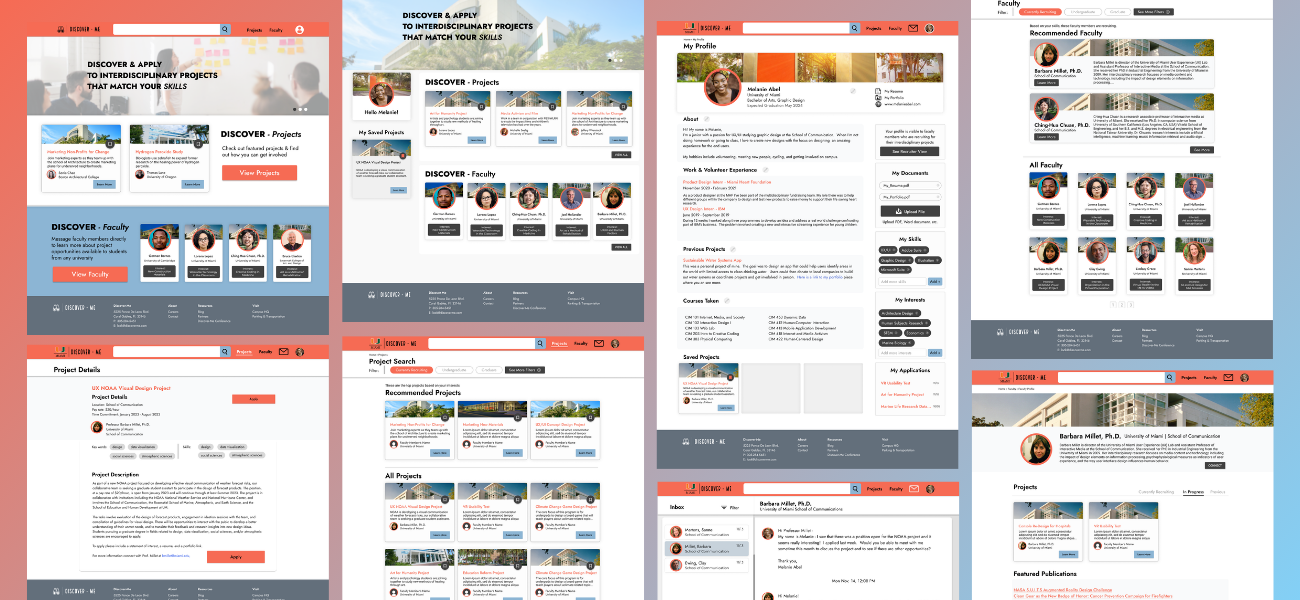
The final product delivered:
Walkthrough - Project search & application process
Click below to view version 3, the final iteration, of the prototype!
Executive Pitch
We concluded the project by presenting Discover-Me to the Dean and Provost of the Graduate School as a scalable institutional innovation tool. The platform was positioned not as a student networking app, but as a university-level recruitment infrastructure solution.